Category Archives: Pollinator Corridor

Pollinator Week! June 19-25, 2023

Bee on Lupine – Pollinator garden west of MRG overpass near APD

It seems early to be celebrating pollinators in June, since there are limited flowers blooming at this time, but maybe it is a way to welcome them back? Daisies, a few lilies, ajuga, creeping charlie, columbine, apple blossoms, bleeding heart, and dandelions have offered their nectar and pollen, and lupines have bloomed as welll. Check the pollen on this bumble bee’s saddlebags! (The “saddlebags” are officially called “corbicula” and are pollen storage sacs.) Have you seen any pollinators yet on the MRG?

Planting for Pollinators – “Think meadow!”

Tri-colored Bumblebee on Creeping Charlie

“Oh, it’s so overgrown!” said a woman coming back to her car after running on the MRG. She was commenting on one of the pollinator gardens. I wish I had said “Think meadow.”

Were it not for the dandelions, Creeping Charlie, clover, self-seeded violets, wild strawberry flowers, and a few wild mustard plants, there would be very little nectar and pollen for bees in the MRG pollinator gardens this time of year. The pollinator gardens are more like wild meadows than formal gardens. Many pollinators are attracted to goldenrod, milkweed, dandelions, wild mustard; these flowers would likely be weeded out of a formal garden. In order to provide a variety of flowers from Spring through late Fall, it helps to scrap the idea of an orderly garden and seems better to work with the natural world. Yes, as the season progresses, there will be some showy flowers too, but it is satisfying to see that the creeping charlie was there for this tri-colored bumblebee. Think meadow!

Happy First Day of Spring from the MRG !

Daffodils emerge when we desperately need them!

Wood’s Pink Asters

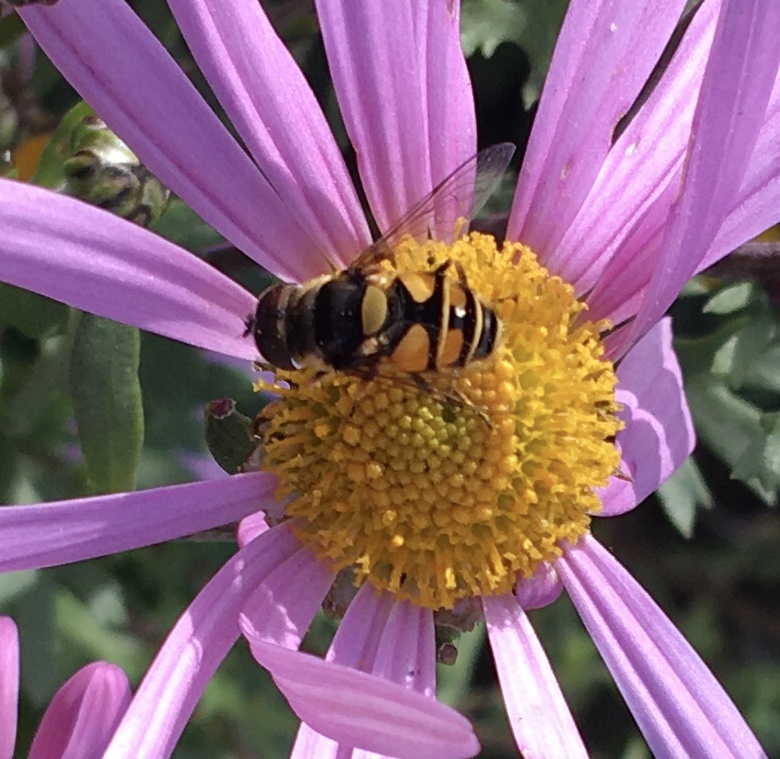
While Echinacea, Bee Balm. Queen Anne’s Lace, Lupine, lilies, and so many other flowers have passsed by, these late-blooming asters on the MRG Pollinator Corridor have become an important resource to a variety of pollinators. Bees, wasps, butterflies, moths, and flies are still looking for pollen and nectar and these asters are a welcomed bit of color, for humans too.

Yellow Collared Scape Moth
Common Bottle Fly
Drone Fly

Hardy Pollinator Flowers

In spite of the frost, there are still flowers in bloom mid-October: Sunflowers, Garlic Chives, Black-eyed Susans, and Asters, to name a few. Bees, wasps, and other pollinators continue to visit our MRG Pollinator Corridor, such as this bee on a Wood’s Pink Aster at Dysfuntion Junction. (Intersection of Mechanic, Mascoma, High streets.)

Pollinators!

Until this week, we have seen very few pollinators along the MRG Pollinator Corridor. It was a relief to finally spot many bees and a few monarchs and hummingbirds these last few days The red bee balm is a powerful draw! And the butterfly milkweed is finally attracting monarchs.

Where Are the bees?

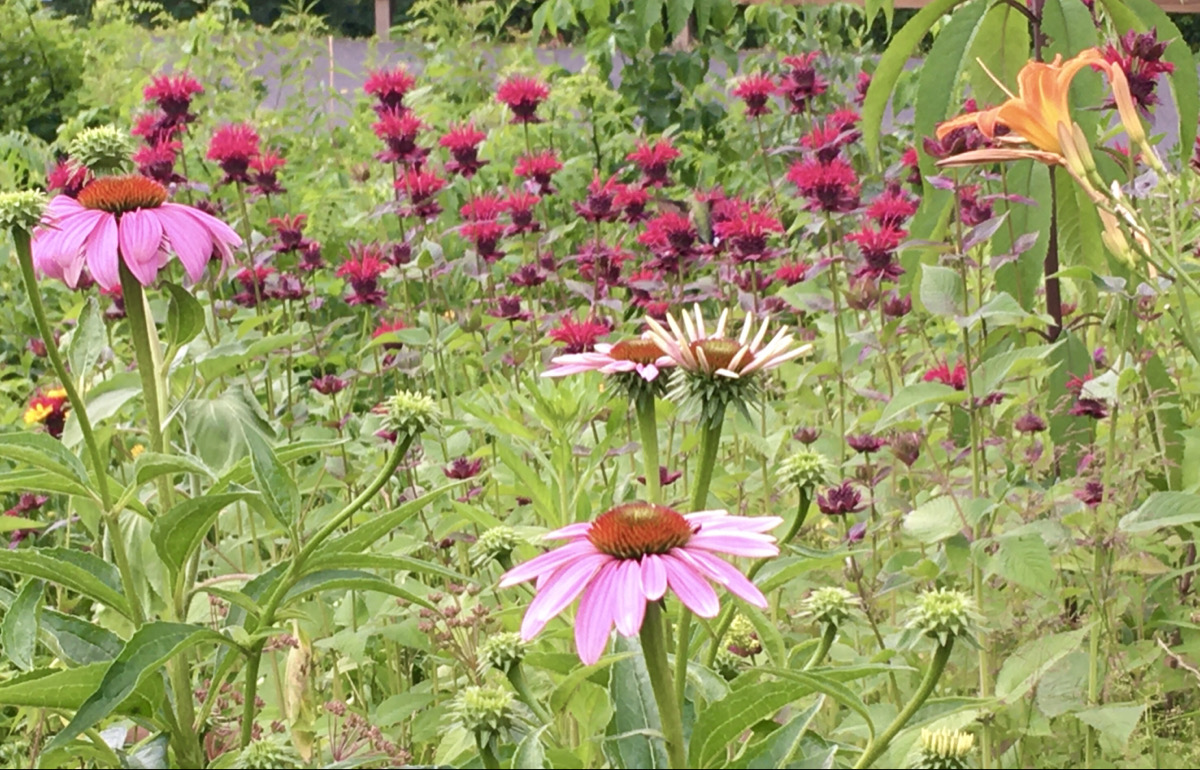
There have been very few bees and butterflies along the MRG Pollinator Corridor so far this year. We keep hoping that they have found some idyllic, pesticide-free meadow nearby and are congregating there , soon to show up for the Echinacea, Black-eyed Susans, Bee Balm, Black Cohosh, Calendula, Day Lilies, Obedient Plant, and all the other treats on offer right now at the garden west of the overpass by APD. The good news is the hummingbird that was enjoying the red bee balm today!

Monarch Caterpillar!

Ordinarily, when bugs are eating our plants, it is cause for concern . . . but in a pollinator garden, when it’s a monarch caterpillar, we rejoice! Note how much of the leaf has been eaten!

MRG pollinator garden at intersection of Mascoma/Mechanic/High streets

Hummingbird Moth

IMG_6017 (1).jpg

Work on the tunnel this Spring destroyed the MRG pollinator garden on the Goss Logan hillside. Only the hardiest of perennials survived. Red bee balm was one of the survivors . . .  and it attracted this tiny hummingbird moth. These Dr. Seuss-like creatures have hummingbird energy, hovering and darting about. The proboscis and antennae are like those of butterflies. The furriness and striping are like bumble bees. The tail is like that of a lobster.

The caterpillar stage of the hummingbird moth looks much like a tomato hornworm. Hard to believe that this creature that looks so much like a hummingbird could emerge from such a caterpillar!

.The caterpillar of the hummingbird moth bears a horn at the tip of its tail that gives rise to the colloquial name of these larvae.  

Hummingbird Moth Caterpillar Stage

Rain!

Rain refreshed the various pollinator gardens along the MRG today – there were pollinators aplenty!

Silver Spotted Skipper on Echinacea

Tiny bees on Black-eyed Susan

Bee on Bee Balm

Silver Spotted Skipper on Liatris

Sweat bee on Echinacea