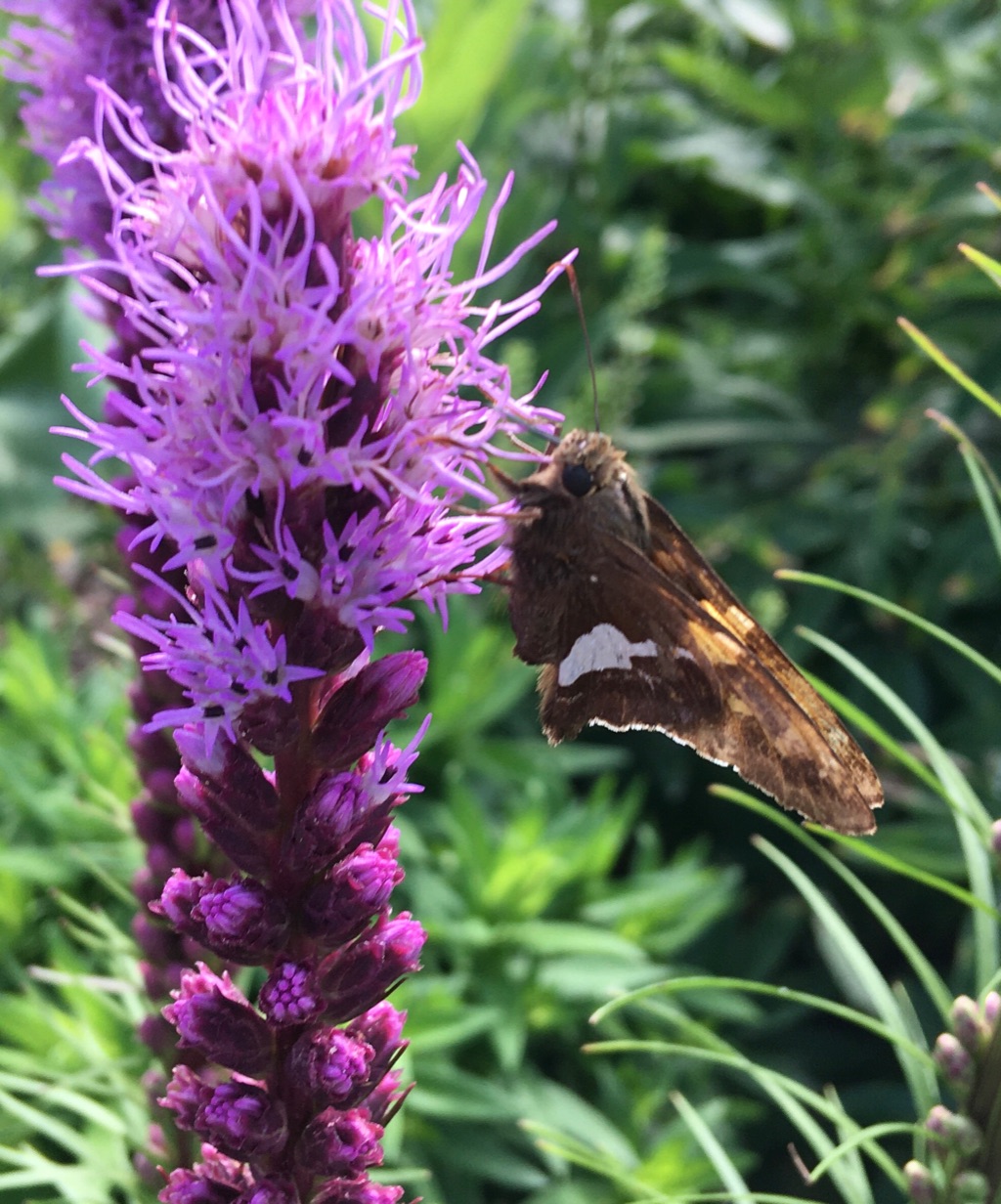
Friday night’s heavy rain beat down the Joe Pye Weed at the MRG overpass pollinator garden, but that didn’t stop this American White Admiral butterfly from enjoying it. Interesting that the immature caterpillar wraps itself in a leaf that wards off freezing temperatures and protects it from hungry birds. How do they know how to do this?! We humans are so dependent in our early years!
The Vermont Center for EcoStudies is launching a pollinator research program in the Upper Valley, and the MRG is part of that study. The Center is asking “citizen scientists” to report on pollinator sightings, sending photos and relevant info to either iNaturalist or to VT Center for Ecostudies. There is a sign by the tunnel inviting all to record their pollinator sightings.
You can register your pollinator observations by downloading the QR code above, downloading the iNaturalist app on your cell phone, or emailing your photo to pip@vtecostudies.org. Remember that, in this case what is important is a clear photo of the pollinator and flower. Be sure to label your photo “MRG”. It will be interesting to see what varied pollinators visit the MRG and which plants they seem to favor.
In spite of the many pollinator gardens along the MRG and the heavenly scent of the blooming milkweed , pollinator sightings have been minimal: Cabbage moths, a few bees and butterflies . . .and right now, long-horned Red Milkweed Beetles. Those can be found on the common milkweed growing at the intersection of High/Mascom/Mechanic streets MRG Pollinator Garden. Their red and black bodies are easily seen on the bright green leaves – no need for camouflage since predators quickly learn the beetles are toxic from the milkweed sap they eat. You may even see them rubbing their mouths on leaves to prevent sap build-up which can actually fuse their mouths if it hardens. Seeing one on a purple coneflower makes me wonder if flowers other than milkweed make better napkins?!
“Oh, it’s so overgrown!” said a woman coming back to her car after running on the MRG. She was commenting on one of the pollinator gardens. I wish I had said “Think meadow.”
Were it not for the dandelions, Creeping Charlie, clover, self-seeded violets, wild strawberry flowers, and a few wild mustard plants, there would be very little nectar and pollen for bees in the MRG pollinator gardens this time of year. The pollinator gardens are more like wild meadows than formal gardens. Many pollinators are attracted to goldenrod, milkweed, dandelions, wild mustard; these flowers would likely be weeded out of a formal garden. In order to provide a variety of flowers from Spring through late Fall, it helps to scrap the idea of an orderly garden and seems better to work with the natural world. Yes, as the season progresses, there will be some showy flowers too, but it is satisfying to see that the creeping charlie was there for this tri-colored bumblebee. Think meadow!
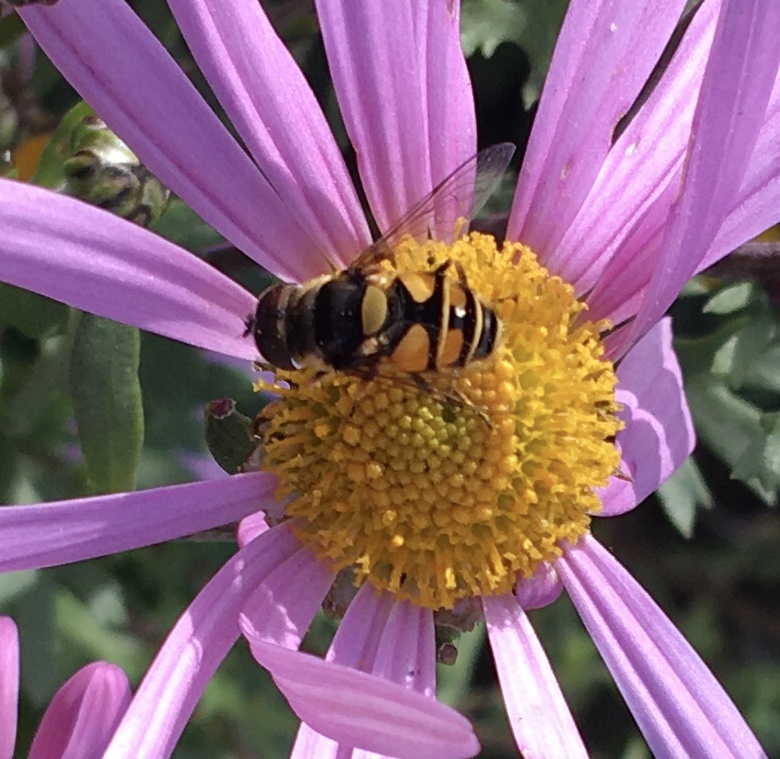
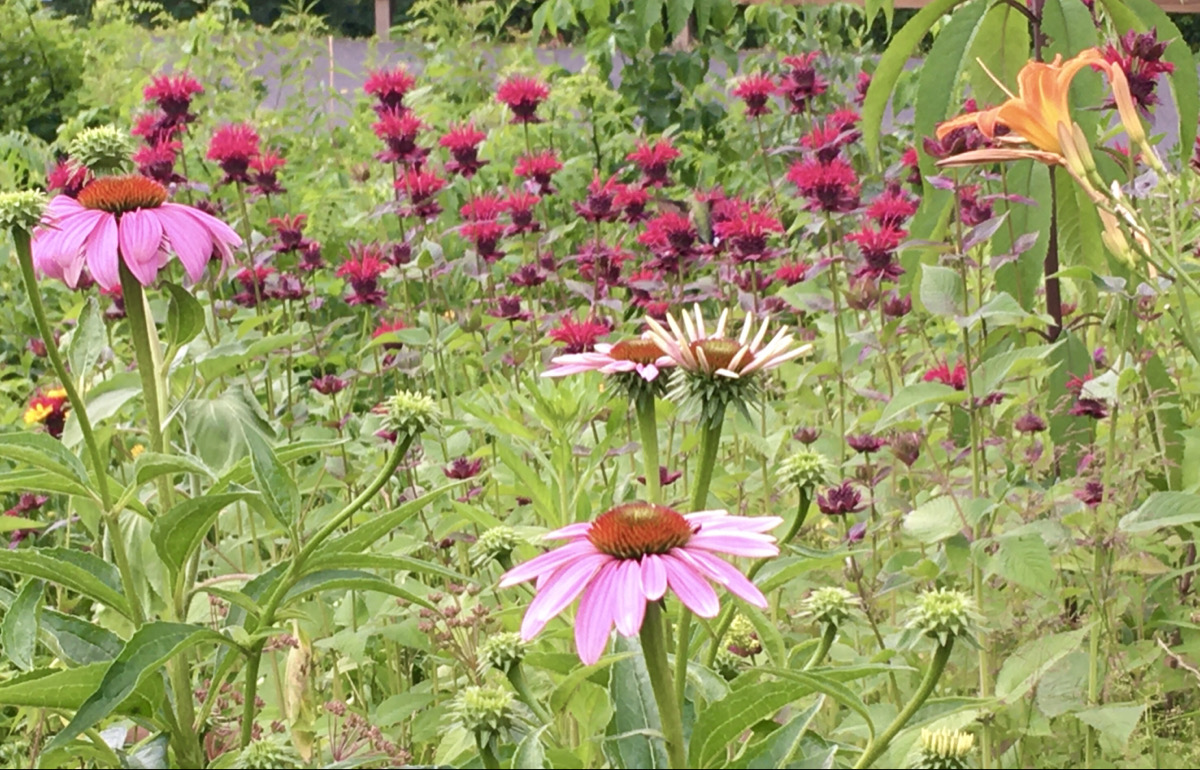
While Echinacea, Bee Balm. Queen Anne’s Lace, Lupine, lilies, and so many other flowers have passsed by, these late-blooming asters on the MRG Pollinator Corridor have become an important resource to a variety of pollinators. Bees, wasps, butterflies, moths, and flies are still looking for pollen and nectar and these asters are a welcomed bit of color, for humans too.
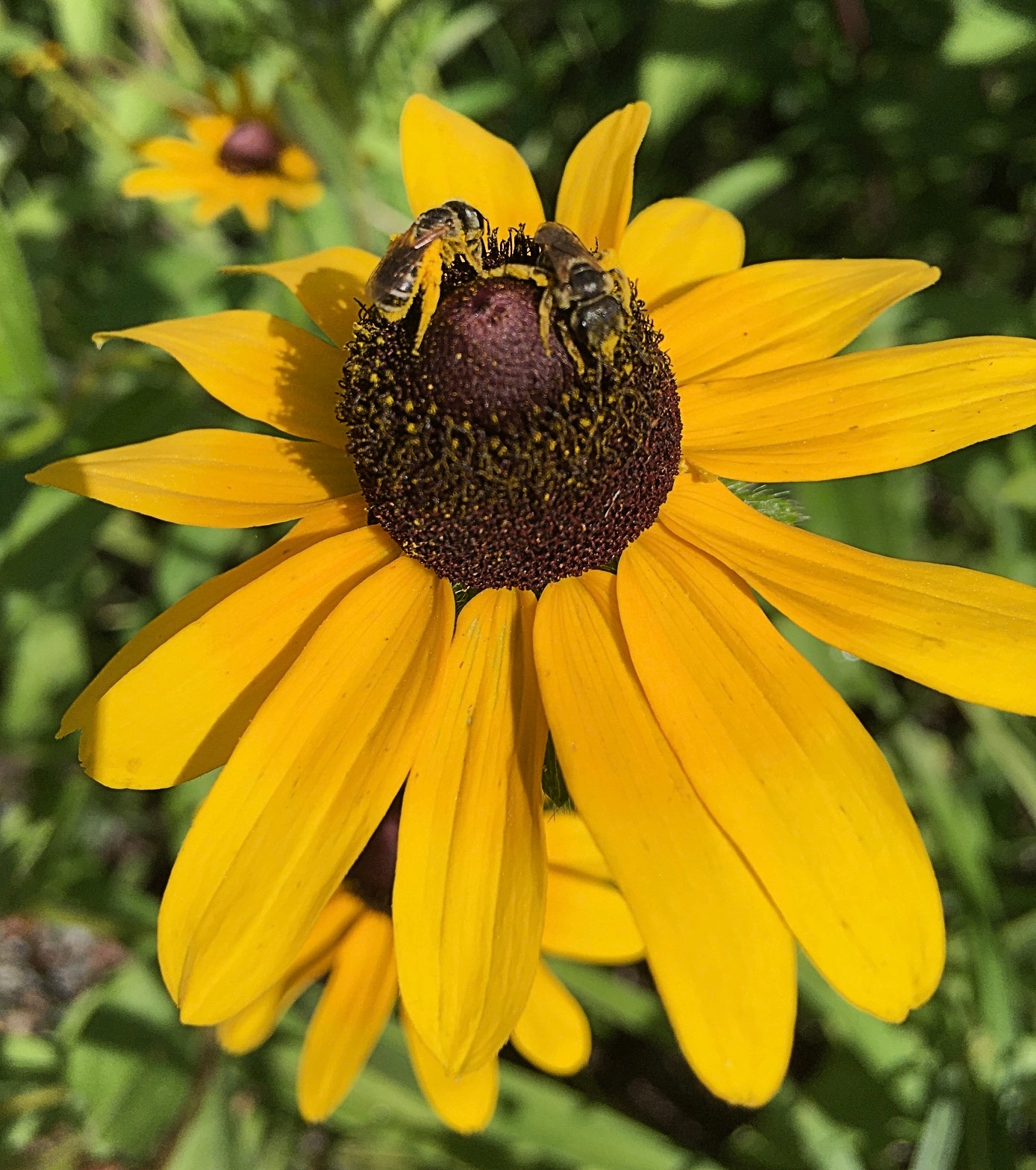
In spite of the frost, there are still flowers in bloom mid-October: Sunflowers, Garlic Chives, Black-eyed Susans, and Asters, to name a few. Bees, wasps, and other pollinators continue to visit our MRG Pollinator Corridor, such as this bee on a Wood’s Pink Aster at Dysfuntion Junction. (Intersection of Mechanic, Mascoma, High streets.)
Until this week, we have seen very few pollinators along the MRG Pollinator Corridor. It was a relief to finally spot many bees and a few monarchs and hummingbirds these last few days The red bee balm is a powerful draw! And the butterfly milkweed is finally attracting monarchs.
There have been very few bees and butterflies along the MRG Pollinator Corridor so far this year. We keep hoping that they have found some idyllic, pesticide-free meadow nearby and are congregating there , soon to show up for the Echinacea, Black-eyed Susans, Bee Balm, Black Cohosh, Calendula, Day Lilies, Obedient Plant, and all the other treats on offer right now at the garden west of the overpass by APD. The good news is the hummingbird that was enjoying the red bee balm today!
Work on the tunnel this Spring destroyed the MRG pollinator garden on the Goss Logan hillside. Only the hardiest of perennials survived. Red bee balm was one of the survivors . . . and it attracted this tiny hummingbird moth. These Dr. Seuss-like creatures have hummingbird energy, hovering and darting about. The proboscis and antennae are like those of butterflies. The furriness and striping are like bumble bees. The tail is like that of a lobster.
The caterpillar stage of the hummingbird moth looks much like a tomato hornworm. Hard to believe that this creature that looks so much like a hummingbird could emerge from such a caterpillar!