Author Archives: uvlocalvores

Chance Encounter!

Thanks to Dan Moriarty for this photo of his late morning encounter with a snapping turtle near the power dam bridge at Glen Road section of MRG. Wikipedia tells us: “The common snapping turtle is noted for its combative disposition when out of the water with its powerful beak-like jaws, and highly mobile head and neck . In water, it is likely to flee and hide underwater in sediment.” They have been around for millions of years – this one looks as if she might be an original . . . and looks like many of us before we’ve had our morning coffee!

The Flowering of the MRG

A trishaw ride on the MRG this morning revealed an interesting phenomenon: many spring wild flowers are yellow! Thanks to Google, we now know that early pollinators are often flies with limited color perception. It is theorized that Spring pollinators are attracted to the contrast of white and yellow amid the dark greens.

Eastern Carpenter Bee on Dandelion

Native Golden Alexander

Greater Celandine, a non-native wildflower

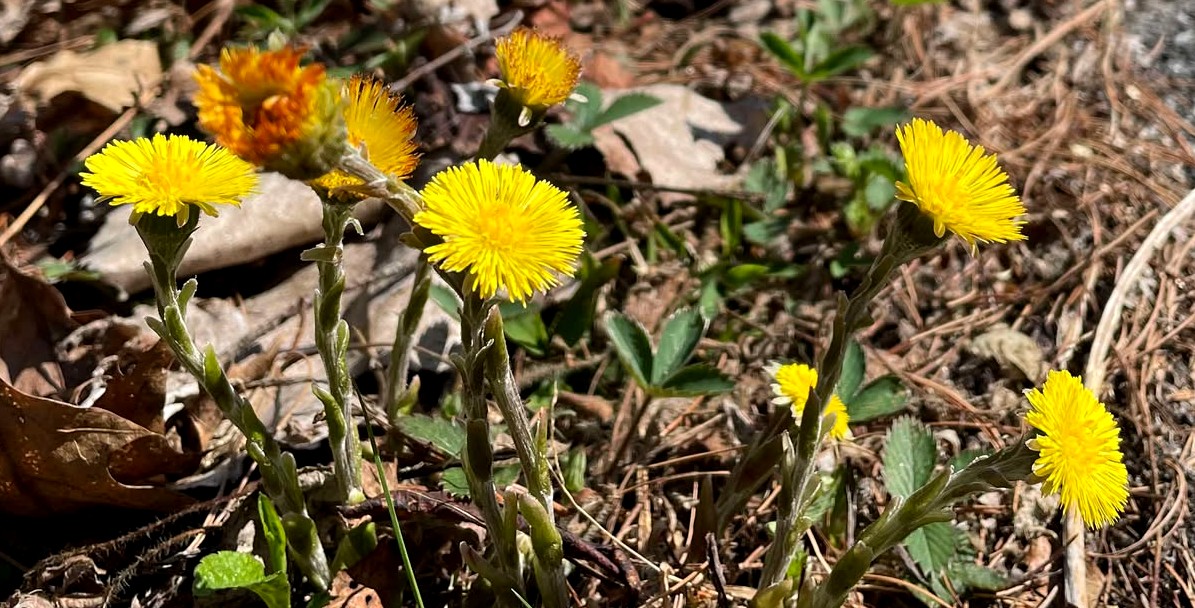
Early blooming Coltsfoot

Most Coltsfoot has now gone to seed.

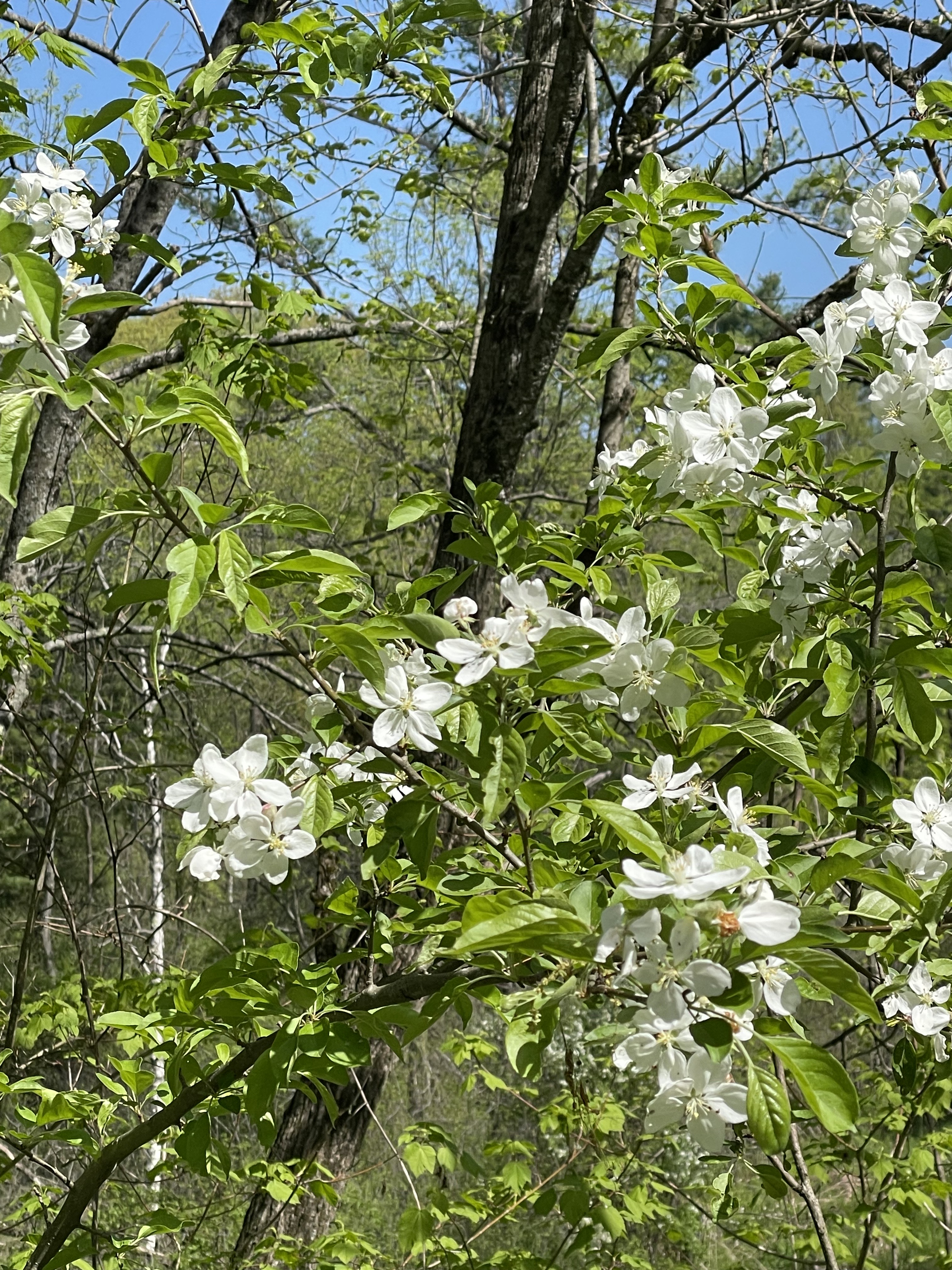
Apple Blossoms

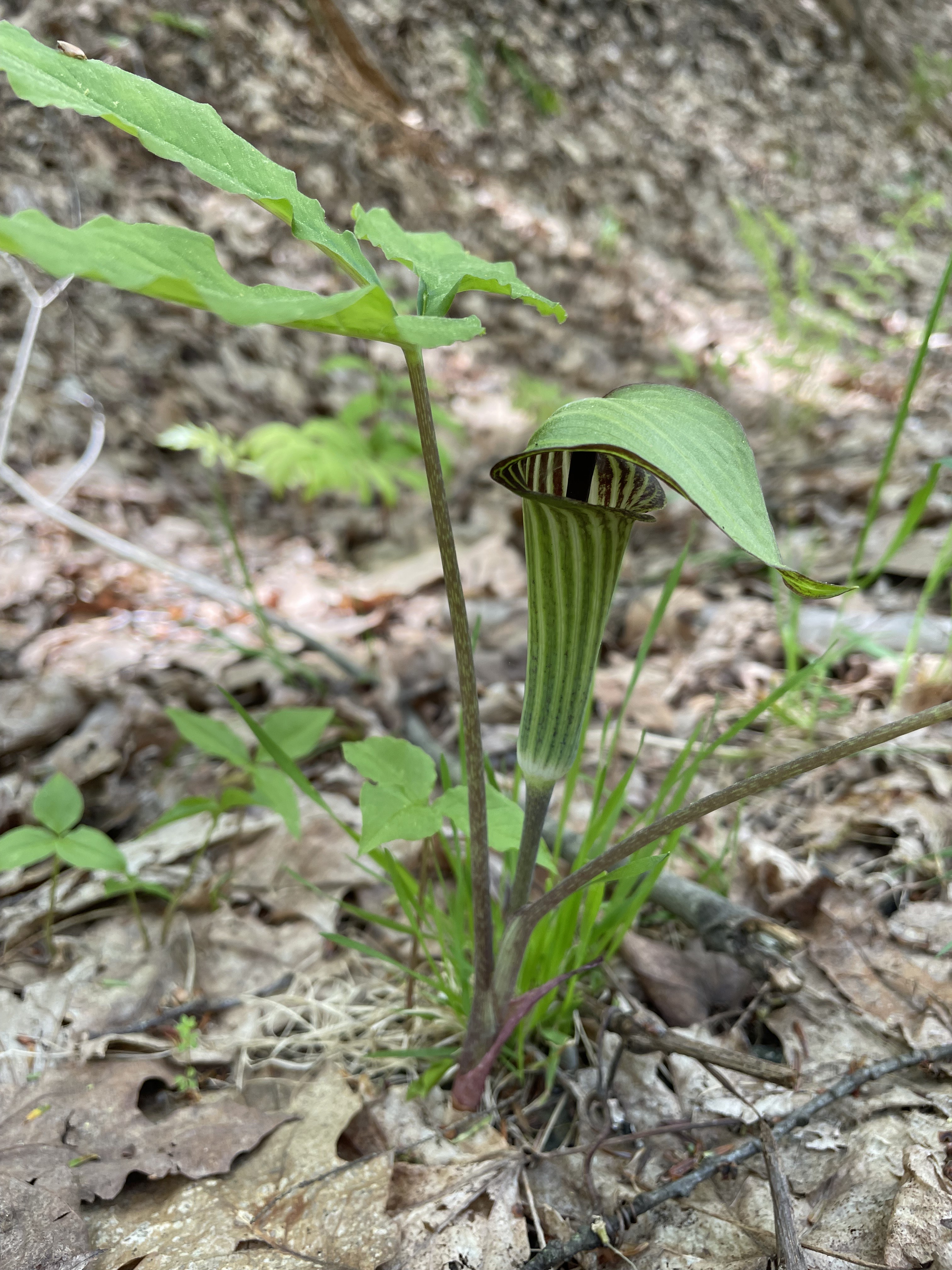
Jack-in-the-Pulpit . . . or is it Jill? Did you know that Jack-in-the-Pulpits can morph into Jill?

Chokecherry

Birds such as robins, thrushes, and jays are attracted to the berries that come later in the season. Bears, raccoons, chipmunks, and squirrels also consume the berries, but they are lethal to horses.

We saw honeysuckle, fiddlehead ferns, wild strawberry in flower, white and purple violets, purple flowering ground ivy, and much more. Birds were calling and a turtle on a log in a small pond behind the Miracle Mile was basking in the sun. Who would guess that this natural beauty was thriving behind that parking lot??? We spotted a goose couple on the bank of the river with their little goslings.

Many thanks to Trishaw pilot John Newman for a wonderful, uplifting ride and for all these great photos. How many different flowers can you find on the MRG this week?

For Info on scheduling a Trishaw ride on the Mascoma River Greenway or Norther Rail Trail in Lebanon or onbecoming a volunteer pilot check out this link

Tuesday Greenway Strolls

Tuesdays, May 13, 2025 and May 20, 2025, 9:30am to 10:30am Mascoma River Greenway;

Get outside with your tots in tow and join Leb Rec on the Mascoma River Greenway. Bring your little ones in a stroller or carrier, or let them walk, and let’s explore together. It is a proven fact that moving and getting fresh air at least 30 minutes a day helps little ones to sleep, helps build immunity, and decreases stress for everyone!

Come make new adult and tot friends! Register online at LebanonNH.gov/Regist

Horsetails – Ancient Living Fossils

“Horsetails can be considered living fossils. This group of plants is what is left of a group of plants that were as thick as forests and had relatives as big as trees that flourished during the Devonian period approximately 350 million years ago.” Purdue Extension Weed Science

Horsetail stems are jointed and hollow. They do not appear to have leaves; their leaves are reduced to small scales. These plants require no pollination; they have no flowers – reproduction is by spores. Some stems are fertile and some sterile; The little brown cone at the end of the fertile stem is the part that produces spores. It is the sterile stems that produce energy through photosynthesis

As the fertile stems wither, the sterile, chlorophyll-producing secondary stems appear, covered with whorls of feathery green branches. The energy they gather through photosynthesis goes to underground tubers for storage, allowing horsetail to survive harsh winters and periods of drought.

(Thanks to trishaw pilot John Newman for the photos.)

Colts Foot

Colts Foot is currently blooming in abundance along the MRG . It is bright yellow and looks somewhat like a dandelion, and, similar to dandelions, Colts Foot flowers emerge before the leaves. The flowers provide nectar and pollen to hungry bees and flying insects in the spring before many other flowers have bloomed.

(Thanks to CSA trishaw pilot John Newman for this photo and the trishaw reconnaissance flight along the MRG!)

Bloodroot Blooming!

A lovely Earth Day treat to discover bloodroot blooming in the MRG Pollinator Garden near the overpass by APD. Bloodroot is a Spring ephemeral native to New Hampshire. The flower does not produce nectar, but the pollen is consumed by insects such as flies, bees, and beetles The seeds of the bloodroot provide food for ant colonies.

Easter Sunday: Spring – Hope – Renewal!

You may remember that a Golden Russet apple tree, planted on the Mascoma River Greenway (behind the Miracle Mile theaters) was felled by a beaver this winter.

Upper Valley Apple Corps member, Jack Spicer, to the rescue! When he heard of the loss, he offered to graft new life to the tree stump.

He spliced in 3 different scion twigs: Cabot Russet, Golden Russet, and Cinnamon Girl .

Cleft grafting of the scion wood, ensures good contact in the green layer inside the bark

Jack added tree wound dressing. to seal and protect.

The ribbons indicate the back two grafts are Cabot Russet (Left) and Golden Russet (Right) and Cinnamon Girl in front. If two or more grafts succceed, our apple tree will benefit by the crosspollination of the different varieties.Our fingers are crossed that at least one of these grafts will succeed. What luck to have a skilled volunteer such as Jack, renewed hope for our apple tree, and a beautiful, sunny Easter Sunday!

Thanks to Jack for his generosity and to Susan K. Johnson and Bart Guetti for providing photos. And thanks Susan for putting a metal guard around the tree trunk to prevent beaver damage. One has to have an ecological perspective when planting for pollinators!

Pocket Park Hellebores!

It was a surprise to come upon these hellebores in the Pocket Park by the MRG tunnel. Hellebores offer a valuable food source for insects, including bees and flies, particularly during early spring when other plants have not yet bloomed, .The downward-facing nature of many hellebore flowers offers protection to the pollen from winter rains and shelter for the insect while it feeds,

Glory of the Snow!

Such a treat to see this brilliant color on the MRG by the tunnel! Glory of the Snow is one of the first flowers to bloom in the Spring.Thanks to the nectar-rich blooms, the plant is very popular with pollinators such as bees

Oh No! Beavers!

When one plants, it is always with awareness of the threats – frost, aphids, jumping worms, caterpillars, locusts, woodchucks, browsing deer, so many challenges! In spite of the proximity to the Mascoma RIver, we did not anticipate the threat of beavers. But the Russet apple tree, planted near the MRG Umbrella sculpture, during Climate Action Week, September 2019, has been felled. Hope springs eternal; we have an offer of a scion graft – will it take? Stay tuned!