Author Archives: uvlocalvores

Colts Foot

Colts Foot is currently blooming in abundance along the MRG . It is bright yellow and looks somewhat like a dandelion, and, similar to dandelions, Colts Foot flowers emerge before the leaves. The flowers provide nectar and pollen to hungry bees and flying insects in the spring before many other flowers have bloomed.

(Thanks to CSA trishaw pilot John Newman for this photo and the trishaw reconnaissance flight along the MRG!)

Bloodroot Blooming!

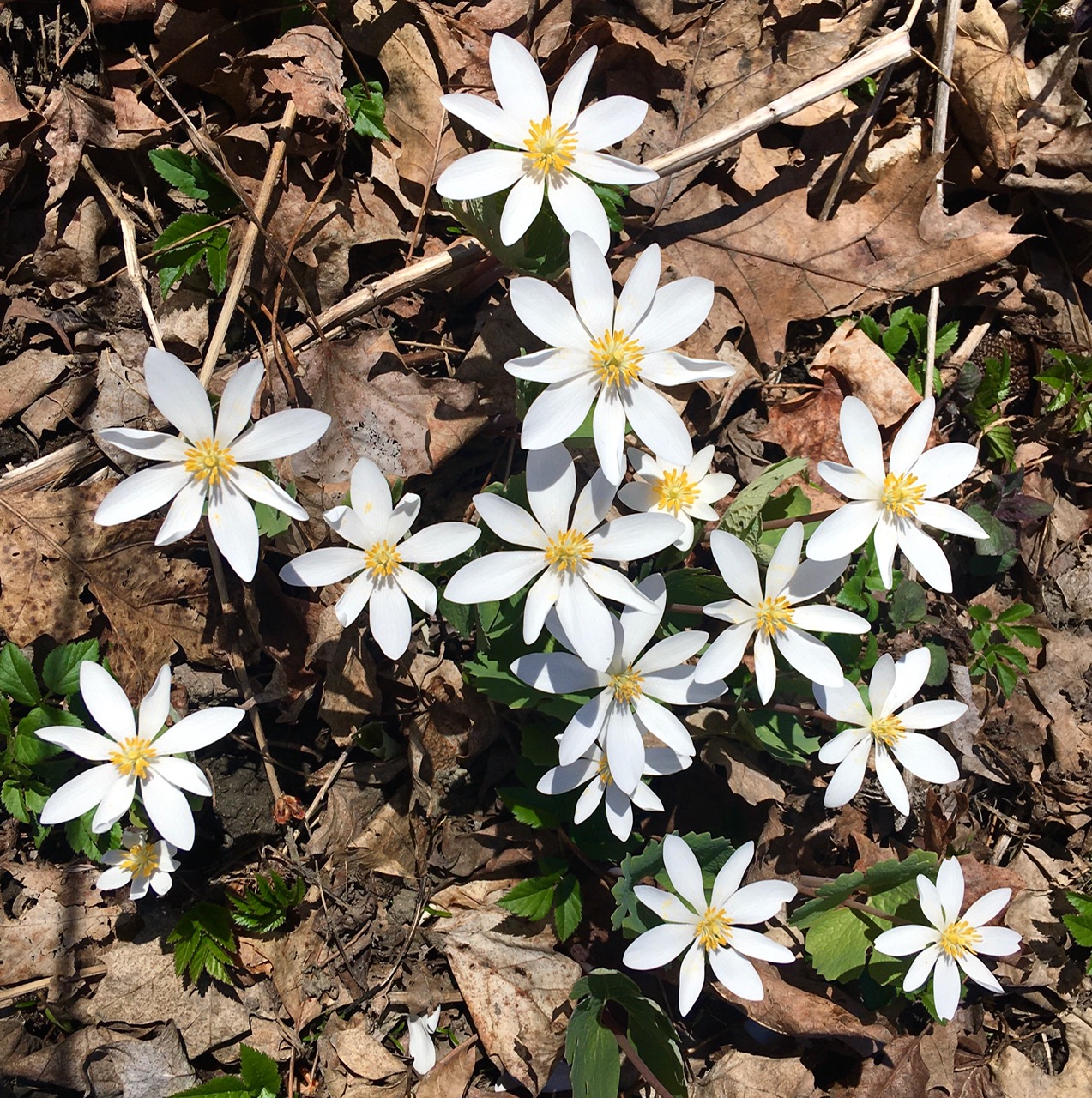
A lovely Earth Day treat to discover bloodroot blooming in the MRG Pollinator Garden near the overpass by APD. Bloodroot is a Spring ephemeral native to New Hampshire. The flower does not produce nectar, but the pollen is consumed by insects such as flies, bees, and beetles The seeds of the bloodroot provide food for ant colonies.

Easter Sunday: Spring – Hope – Renewal!

You may remember that a Golden Russet apple tree, planted on the Mascoma River Greenway (behind the Miracle Mile theaters) was felled by a beaver this winter.

Upper Valley Apple Corps member, Jack Spicer, to the rescue! When he heard of the loss, he offered to graft new life to the tree stump.

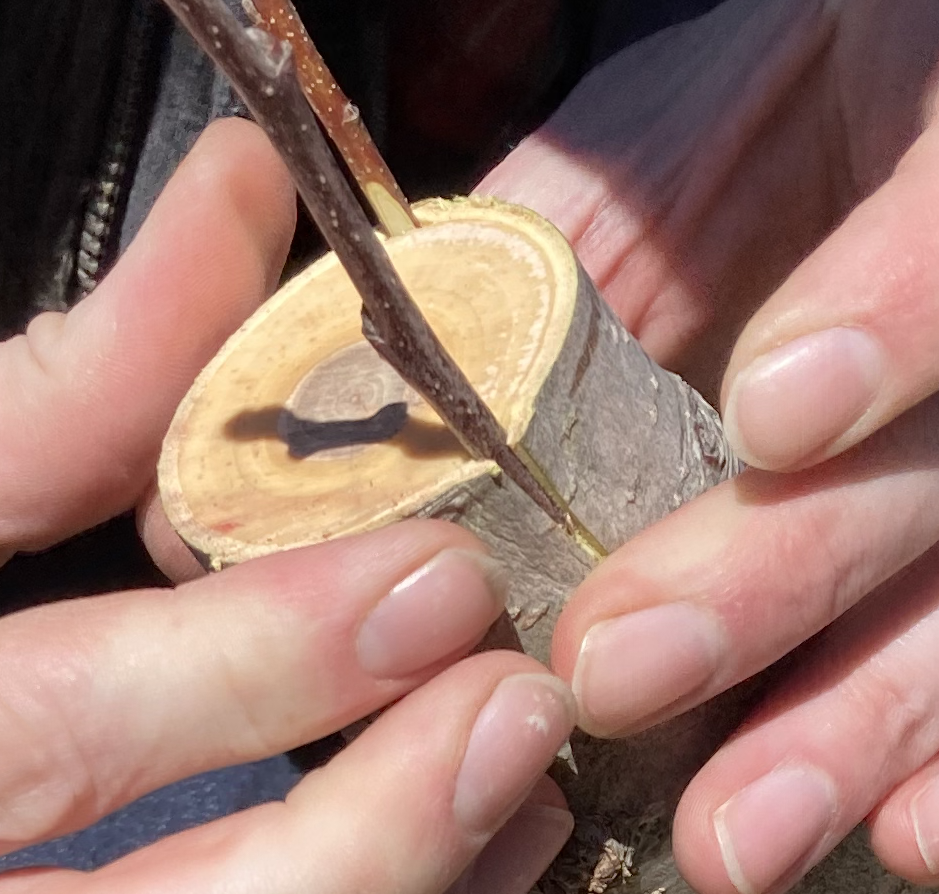
He spliced in 3 different scion twigs: Cabot Russet, Golden Russet, and Cinnamon Girl .

Cleft grafting of the scion wood, ensures good contact in the green layer inside the bark

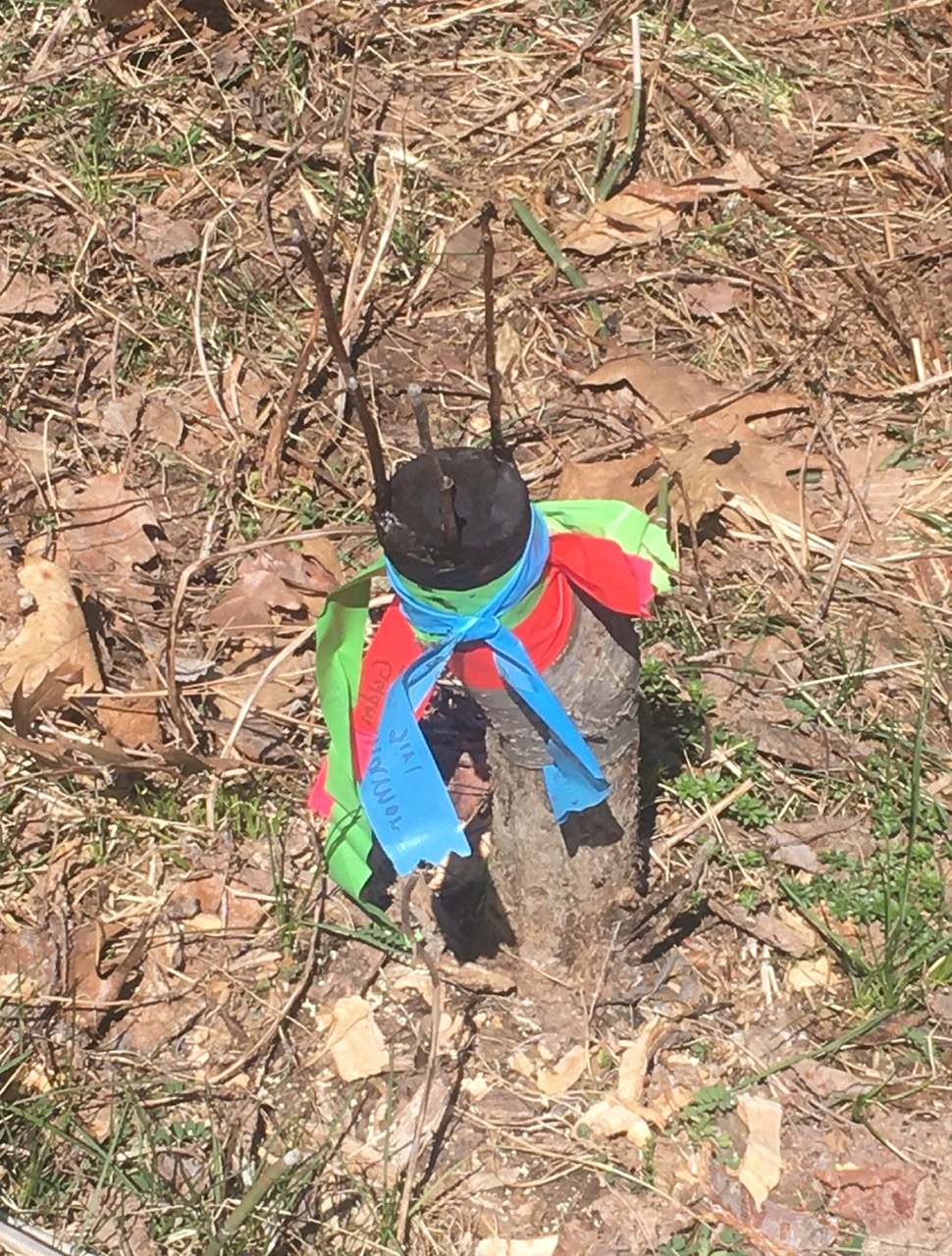
Jack added tree wound dressing. to seal and protect.

The ribbons indicate the back two grafts are Cabot Russet (Left) and Golden Russet (Right) and Cinnamon Girl in front. If two or more grafts succceed, our apple tree will benefit by the crosspollination of the different varieties.Our fingers are crossed that at least one of these grafts will succeed. What luck to have a skilled volunteer such as Jack, renewed hope for our apple tree, and a beautiful, sunny Easter Sunday!

Thanks to Jack for his generosity and to Susan K. Johnson and Bart Guetti for providing photos. And thanks Susan for putting a metal guard around the tree trunk to prevent beaver damage. One has to have an ecological perspective when planting for pollinators!

Pocket Park Hellebores!

It was a surprise to come upon these hellebores in the Pocket Park by the MRG tunnel. Hellebores offer a valuable food source for insects, including bees and flies, particularly during early spring when other plants have not yet bloomed, .The downward-facing nature of many hellebore flowers offers protection to the pollen from winter rains and shelter for the insect while it feeds,

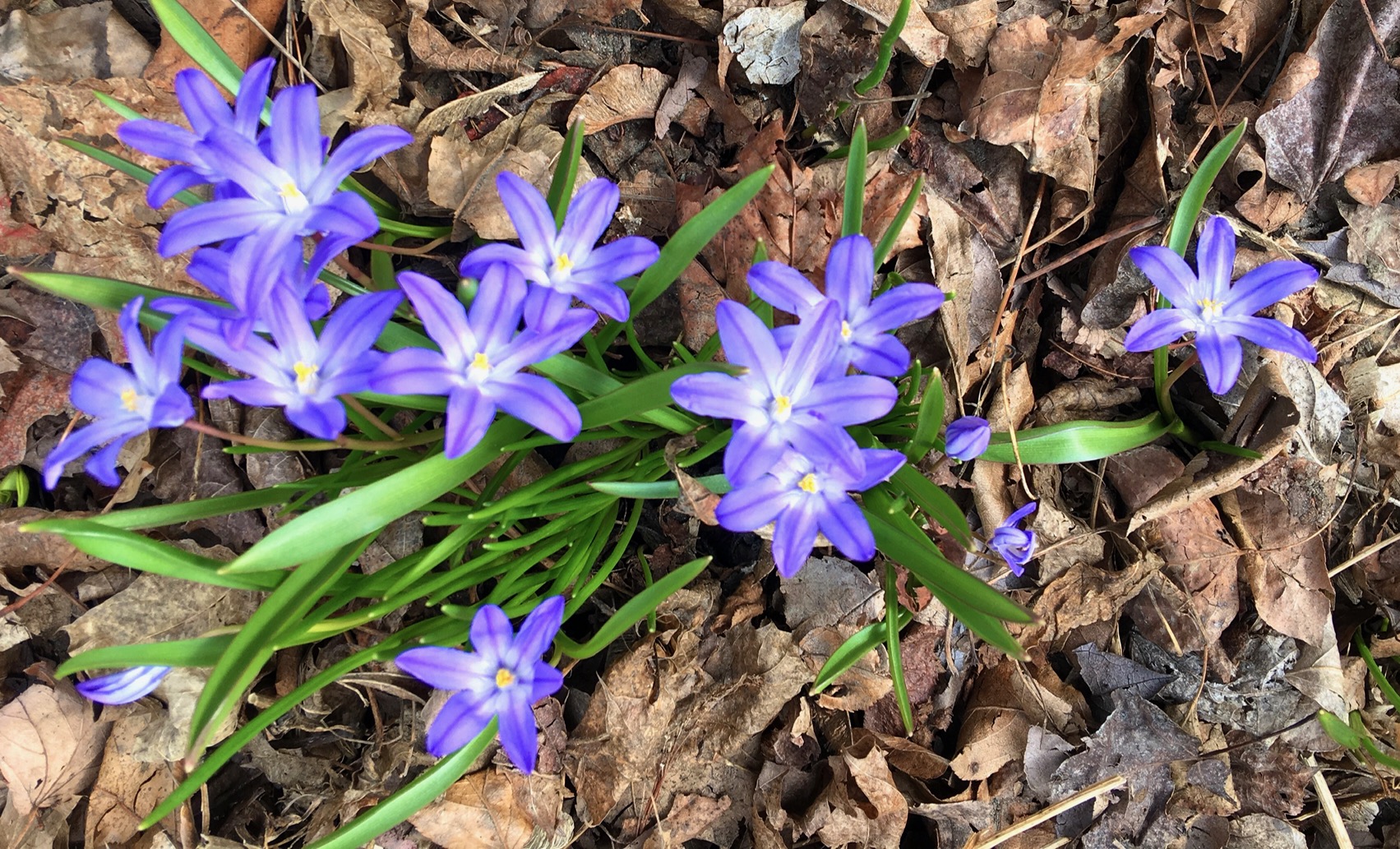
Glory of the Snow!

Such a treat to see this brilliant color on the MRG by the tunnel! Glory of the Snow is one of the first flowers to bloom in the Spring.Thanks to the nectar-rich blooms, the plant is very popular with pollinators such as bees

Oh No! Beavers!

When one plants, it is always with awareness of the threats – frost, aphids, jumping worms, caterpillars, locusts, woodchucks, browsing deer, so many challenges! In spite of the proximity to the Mascoma RIver, we did not anticipate the threat of beavers. But the Russet apple tree, planted near the MRG Umbrella sculpture, during Climate Action Week, September 2019, has been felled. Hope springs eternal; we have an offer of a scion graft – will it take? Stay tuned!

Try Some “Air Vitamins”!

With the recent rains and snowmelt, the Mascoma River was fierce and energizing yesterday. It was not just the roar of the river . . . the air felt different . . . exciting! Thanks to Google, we find that air around waterfalls carries negative ions, which some call “air vitamins”. The splashing of falling water charges the surrounding air with electricity. On impact, some water molecules are wrenched apart and the negatively charged electrons that had held the atoms together are released, only to be snatched up by oxygen, nitrogen and carbon dioxide, components of the surrounding air. These now become negatively charged, and paradoxically, negative ions have a positive effect. Inhaling, delivers them into our bloodstream where they can cause biochemical reactions that increase serotonin levels. Serotonin is a natural mood-influencing chemical that helps reduce the effects of depression, relieves stress, and boosts energy.

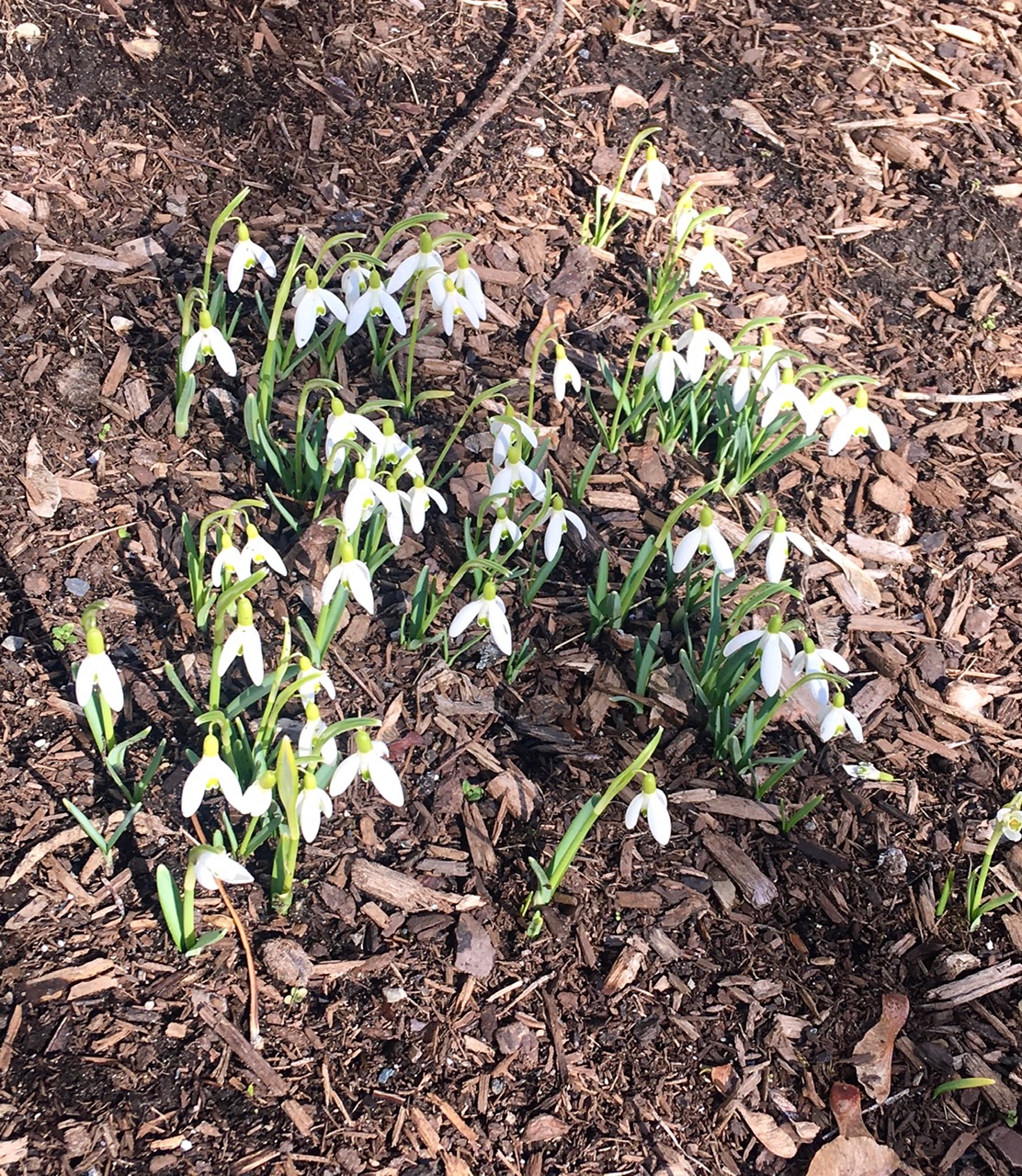
If the current chaos of our world is getting you down, head to the MRG, pick up some negative air ions . . . oh, and check out the snowdrops in the Pocket Park by the tunnel!

Signs of Spring!

What fun to spot these two on the MRG today! No coats, mittens, boots – such a beautiful day!

Lebanon Pruning Brigade

Bart Guetti shoveling a path to reach the snowbound MRG apple trees by APD

Susan Johnson and Bart part of Lebanon’s new Pruning Brigade!

At least 5 Lebanon residents took advantage of Upper Valley Apple Corps free fruit tree pruning workshop this past Saturday and are now equipped to care for fruit trees that have been planted in Lebanon with the help of Apple Corps. There are 3 apple trees on the MRG, one at Lebanon Library, and 2 pear trees at Kilton Library. February is a good time to prune, while the tree is dormant . . . but first you have to shovel a path to the tree.- that snow was wet and heavy!

Aready planning an apple pie! (Thanks to Bart Guetti for photo)

West Lebanon Power Station

The previous “Waterwheels” post brought up curiosity about the abandoned riverside building near the Terri Dudley Bridge/Glen Road area of the MRG. Not much remains of what had once been the West Lebanon Power Station. Thanks to Lebanon Historical Society Curator Nicole Ford Burley, for providinng this photo of the power station that once existed there.