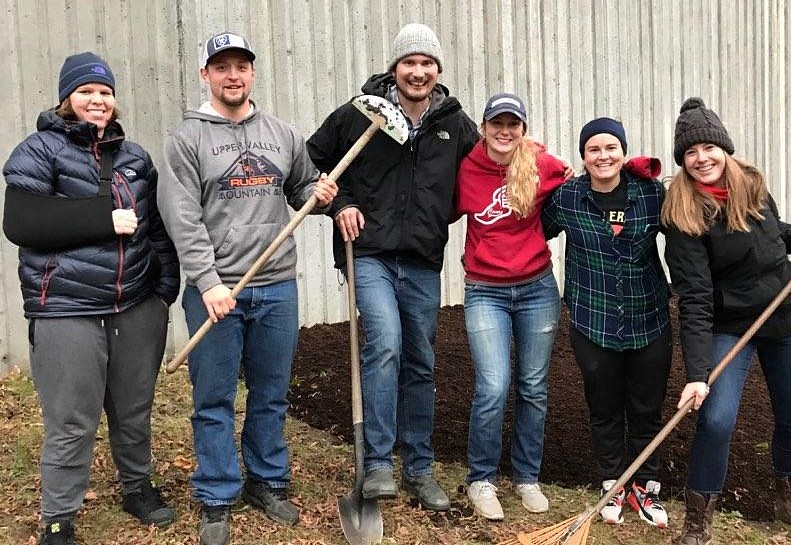
Join Upper Valley Apple Corps and the MRG Pollinator Corridor Project for a day of planting fruit trees and berry bushes along the Mascoma River Greenway. We are “Planting for Solutions” as a part of the global strike week to raise awareness about climate emergency. With funding from the Robert F. Church Charitable Trust, we will be planting organic fruit trees and berry bushes in support of pollinators, wildlife, and even hungry humans.
WHEN: Saturday, September 21st, 10:00-3:00 pm with a lunch break at 1:00 pm
WHERE: Park across from Alice Peck Day Homestead Building and walk west along the Mascoma River Greenway to the next parking lot ~ 500 yards.
WHY: To be a part of the solution, to have fun with community, and to learn to plant and care for fruit trees!
Bring gloves, water, and lunch. Tools and cider will be provided.
A small crew of volunteers set out on Saturday to rescue the MRG from encroaching weeds . . . goldenrod, Japanese knotweed, jewelweed and other hardy plants were taking over the trail.
BEFORE
Jewelweed spilling out over the trail
AFTER
Trimmed and tamed.
Thanks to Bart Guetti for these photos and to all who turned out to help.
As we expand our MRG Pollinator Corridor to support healthy habitat for bees, butterflies, birds, and other creatures, it is especially exciting to learn of the Lebanon Recreation & Parks Department’s plans for controlling poison ivy: “Goats NOT Herbicides.”
The pilot project will begin Tuesday, September 3, 2019 at Riverside Community Park, Civic Memorial Park, Basin Field, and on the Mascoma River Greenway near the public art sculpture “Wheels”.
The goats and sheep will be fenced in around their browsing (eating) areas containing poison ivy, which will include shade and water for the animals. The animal’s caregivers will also be onsite.
For some “Goats 101” if you stop by to see them at one of these sites:
Respect the herders and listen to what they say; they are here to keep the animals safe and need your cooperation.
Please do not try to pet the animals; goats can eat and be exposed to poison ivy with no harm to them, but touching the goats exposed to poison ivy oils can affect humans.
Keep dogs on a leash at all times.
Please remember good trail etiquette and slowdown in the work zone.
If you would like to stop and watch the animals, please stand off the trail to allow other users to pass safely.
A juvenile black bear was spotted on the MRG on Saturday near the Timken bridge. It quickly clambered over a fence and was gone. (Most bears will avoid humans if they hear them coming.) Though a rare sight, it is a good reminder that dogs should be leashed and we all should know how to calmly handle such a sighting:
Identify yourself by talking calmly so the bear knows you are a human and not a prey animal. Remain still; stand your ground but slowly wave your arms. Help the bear recognize you as a human. It may come closer or stand on its hind legs to get a better look or smell. A standing bear is usually curious, not threatening.
Stay calm and remember that most bears do not want to attack you; they usually just want to be left alone. Bears may bluff their way out of an encounter by charging and then turning away at the last second. Bears may also react defensively by woofing, yawning, salivating, growling, snapping their jaws, and laying their ears back. Continue to talk to the bear in low tones; this will help you stay calmer, and it won’t be threatening to the bear. A scream or sudden movement may trigger an attack. Never imitate bear sounds or make a high-pitched squeal.
Pick up small children and dogs immediately.
Do NOT allow the bear access to your food. Getting your food will only encourage the bear and make the problem worse for others.
Do NOT drop your pack as it can provide protection for your back and prevent a bear from accessing your food.
If the bear is stationary, move away slowly and sideways; this allows you to keep an eye on the bear and avoid tripping. Moving sideways is also non-threatening to bears. Do NOT run, but if the bear follows, stop and hold your ground. Bears can run as fast as a racehorse both uphill and down. Like dogs, they will chase fleeing animals. Do NOT climb a tree. Both grizzlies and black bears can climb trees.
Leave the area or take a detour. If this is impossible, wait until the bear moves away. Always leave the bear an escape route.
Be especially cautious if you see a female with cubs; never place yourself between a mother and her cub, and never attempt to approach them. The chances of an attack escalate greatly if she perceives you as a danger to her cubs.
Thanks to the National Park Service for most of this information.
On these hot summer days, getting sufficient water to thirsty pollinator plants along the MRG can be a challenge, especially at Dysfunction Jct. where there is no easy parking. Bart Guetti, head of the Friends of Lebanon Recreation and Parks, and willing waterer, has been watering the new plants by way of bike with saddlebags. Thank you Bart. A perfect solution!
It was exciting to spot a hummingbird moth in the MRG parking lot pollinator garden (west of the overpass near Alice Peck Day Hospital.)
The first sighting of a hummingbird moth can be very confusing; Is it a bird? A big bee? A butterfly? A moth? It buzzes, hovers, and flies from flower to flower like a hummingbird . Instead of a beak like a hummingbird, it has a long tongue-like proboscis that can reach the nectar deep inside flowers. The antennae, colors, and furryness make it look like a bumble bee . . . and the tail is like that of a lobster. It looks like a creature designed by Dr. Seuss! This one lingered longest on the liatris, which seems to be a favored perennial of many pollinators..
Thanks to APD and the Upper Valley Trails Association, we now have a wheelchair- accessible path from the APD/MRG parking lot, opposite the Alice Peck Day Homestead, down to the Mascoma River Greenway. The surface is hard-packed and will eventually be paved. Thanks to all who made it happen!
The Mascoma River Greenway is still a work in progress. The closing of the tunnel under Lebanon’s downtown mall has stymied our linking to the Northern Rail Trail; renovations of the tunnel and the mall are scheduled for summer 2020. The connection to White River Junction on the western end is still in search of a solution. There are other items on the drawing table:
A map of the MRG with parking and access points and distances between points is being created by Dartmouth’s Thayer School students. Way-finding signage is also in progress.
Kiosks are being repaired and built – they will display the above map and other items of interest.
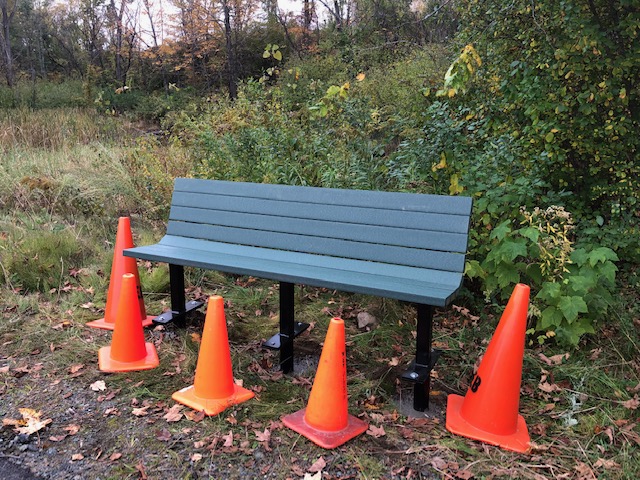
Benches are purchased and awaiting installation.
A pollinator corridor is being created. There are currently four gardens with more plantings planned. (More info)
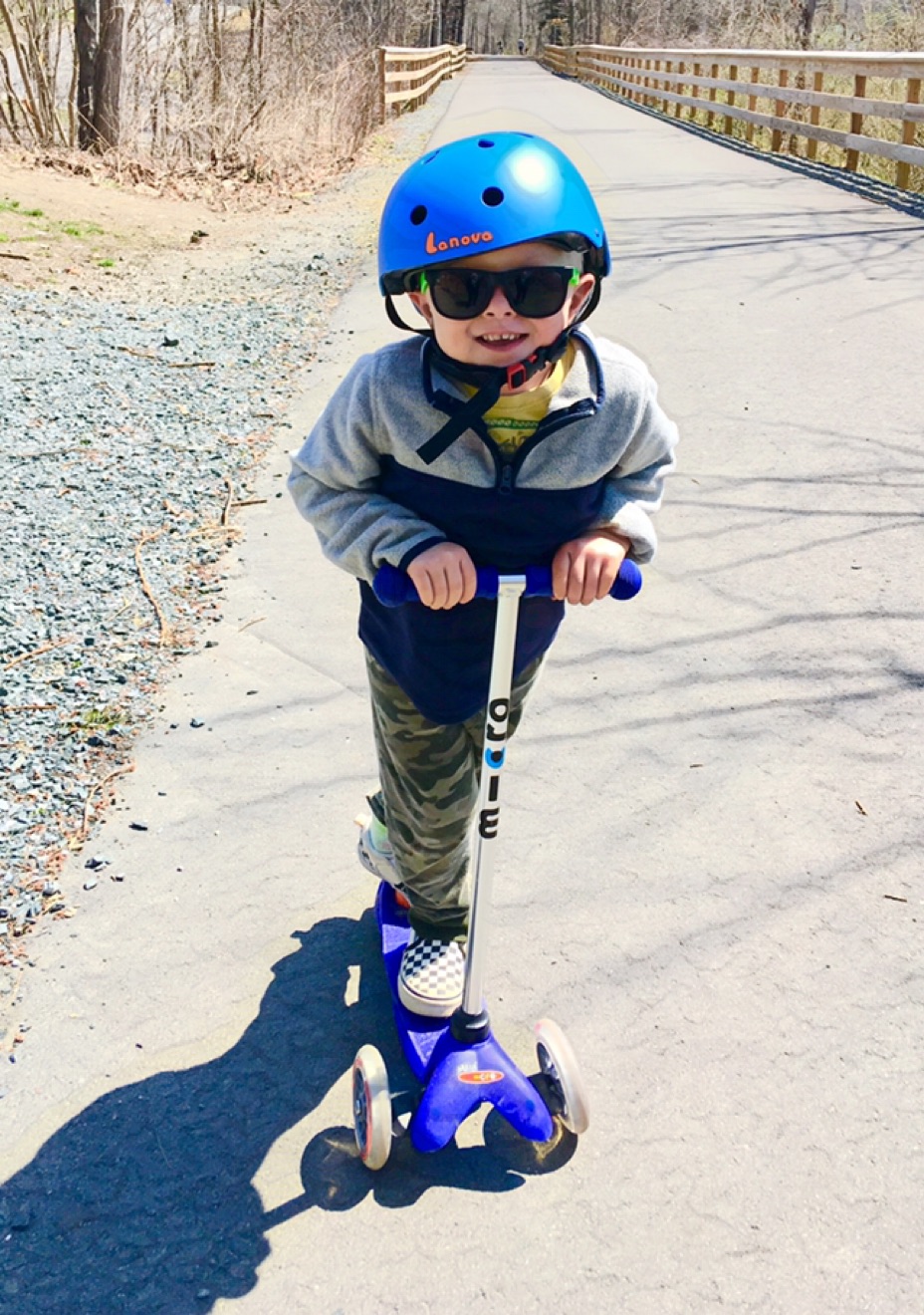
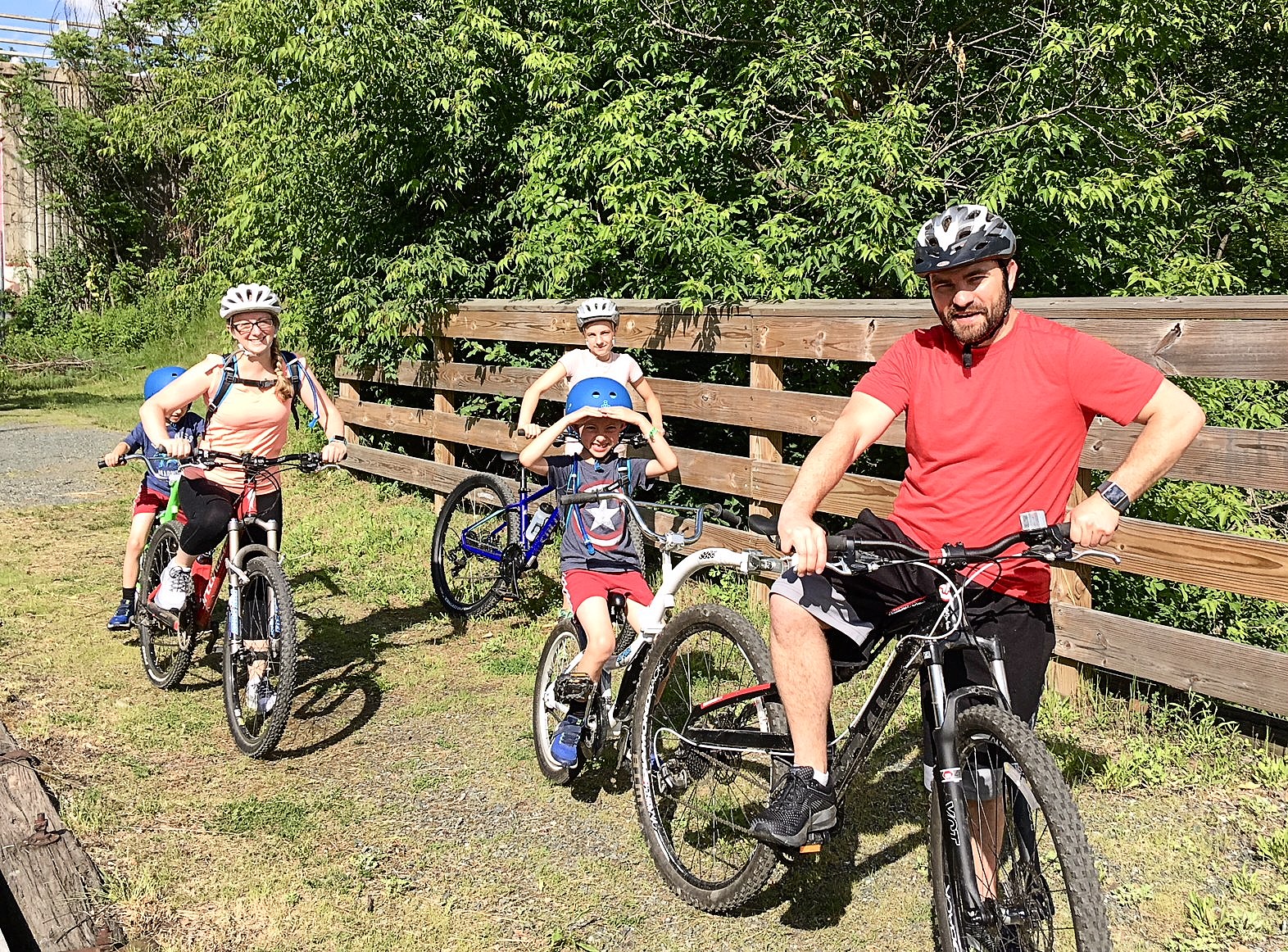
The MRG is a well-used and much enjoyed resource and will continue to improve over time. In the meantime, it has been great to see runners, bikers, dog walkers, baby strollers, roller-bladers, birders, wildflower enthusiasts, skateboarders, skate-skiers, snow-shoers, cross-country skiers, and young children learning to ride bikes, all actively enjoying this wonderful resource.
Those who have parked in the parking lot donated to the MRG by Alice Peck Day Hospital will be glad to know the path to the MRG has been greatly improved and will soon be paved and wheelchair-accessible. Thank you Upper Valley Trails Alliance!
Have you noticed these signs and new plantings along the MRG?
Upper Valley residents are becoming aware of the risks associated with pollinator collapse and are responding by planting organic native perennial flowers, shrubs, and trees to provide food and habitat for pollinators and other creatures, as well as enhanced environment for humans.
There is a plan for a pollinator corridor along the MRG. With funding from the Robert F. Church Charitable Trust, we have begun to create what will be a string of pollinator gardens, fruit trees, and berry bushes for bees, butterflies, birds, and even hungry humans. Check out our new Pollinator Corridor Page at this site and start looking for pollinators along the Mascoma River Greenway. Some of our new gardens will not hit their stride for a year or two but look for the Milkweeds (Common and Butterfly), Purple Coneflowers, Black-eyed Susans, Liatris, Anise Hyssop, New England Asters, Yarrow, Bee Balm, Borage, Coreopsis, Goldenrod, and other flowering pollinator plants as they emerge. If you get a good photo of bees, butterflies, or hummingbirds enjoying the new plantings, please share to the Lebanon Photo Gallery!
I spy with my little eye three busy pollinators on the MRG milkweed!