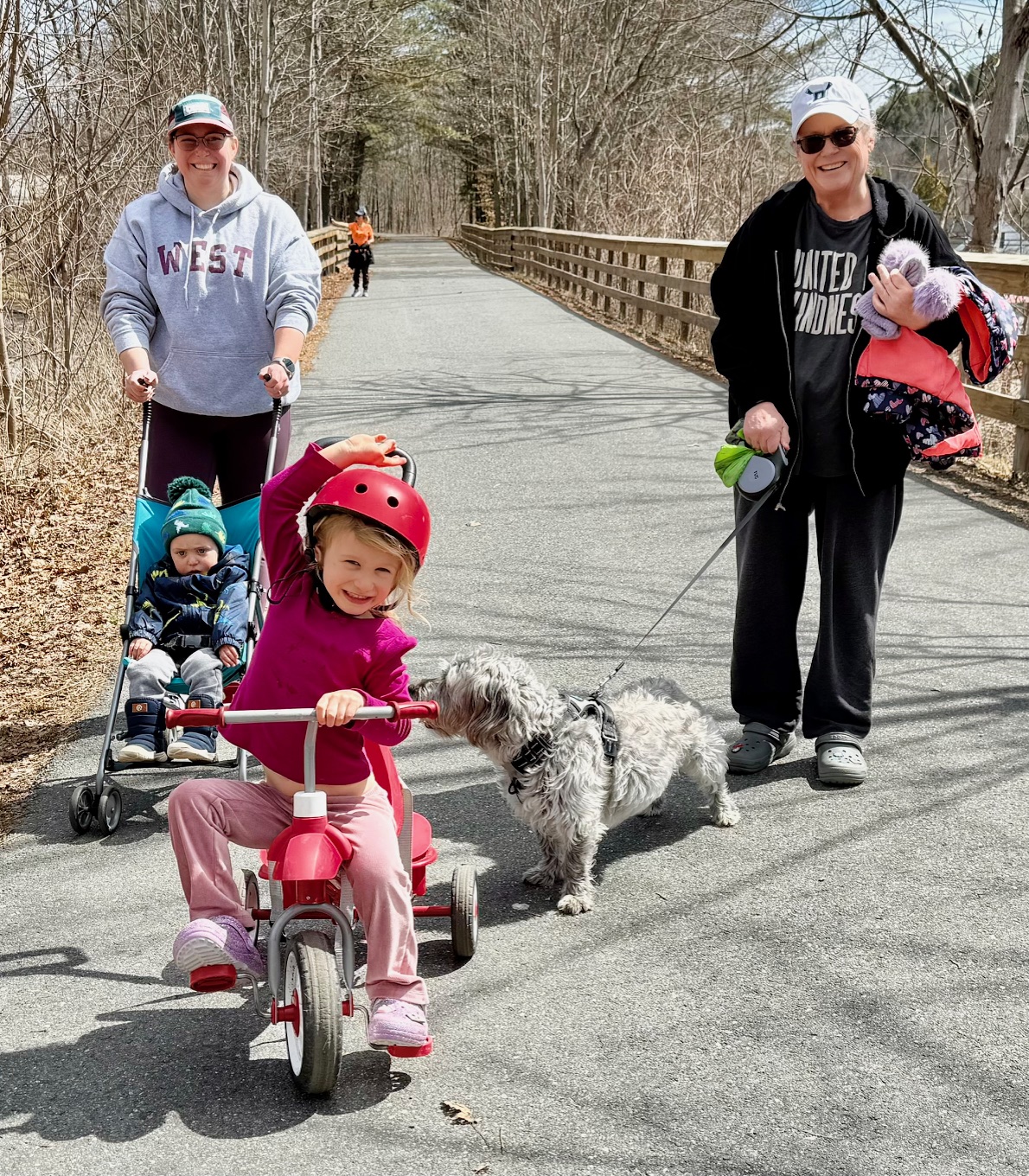
So many people enjoying the MRG on this beautiful, warm, sunny day!
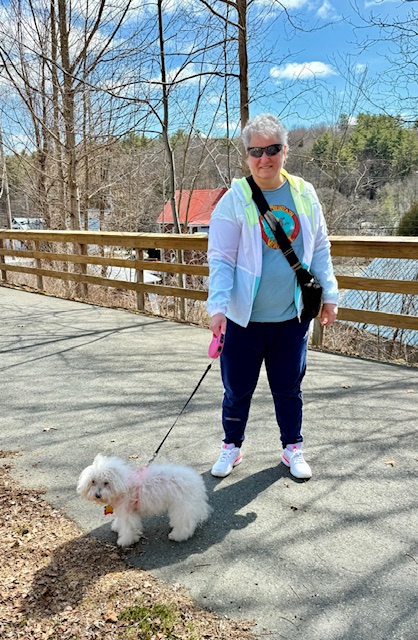
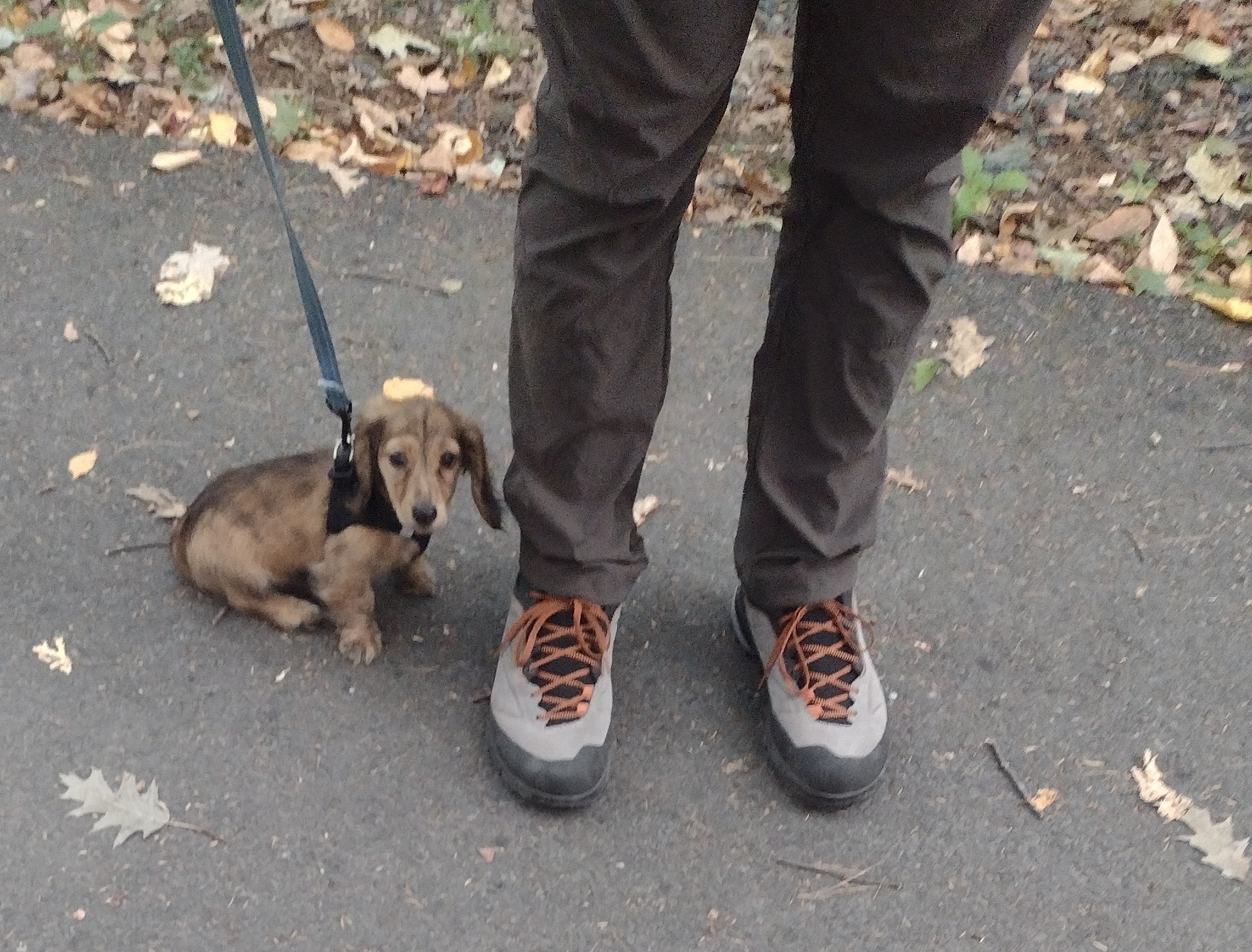
Mindy (looking very fluffy ) and Darla. No parkas, boots, mittens, or umbrelllas, yay!
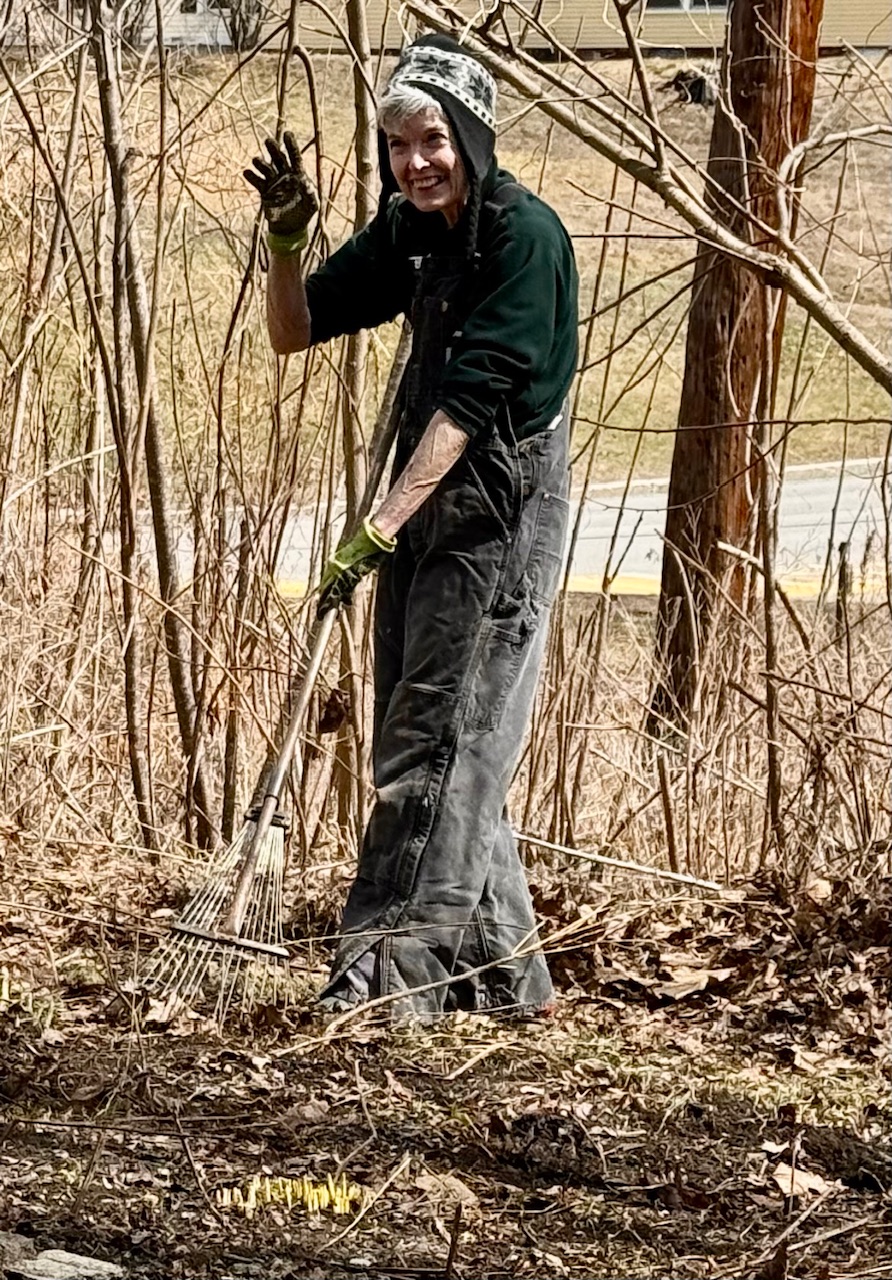
Even the gardeners were out! Though Pat McGovern is the official maintainer of the MRG Overpass Pollinator Garden, it was the 10 year younger sister doing the heavy lifting. Please note those little green shoots in the foreground! An exhausted Joan says, “Forget paying for gym membership, volunteer to maintain the MRG gardens!”
Thanks to Vital Communities for this Action Alert!
URGENT ACTION NEEDED NOW!
Proposed New Hampshire Bill Would Require $50 Annual Bicycle Registration For Every Bike!
A bill pending in the New Hampshire House would create a $50 annual registration fee for every bicycle, including e-bikes.
Public Hearing: Tuesday, January 27 at 11:00 AM, NH Statehouse, Concord NH
What HB1703 Would Do:
Require annual $50 registration fee for all bicycles, including e-bikes, used on state or municipally funded paths, trails, and roadwaysRequire proof of ownership or authorization from the owner
Require parental sign-off for riders under 18
Require riders to either display a registration sticker on the bike or carry the registration certificate while riding
Impose a $100 fine for riding an unregistered bicycle
They say they will direct registration fees and penalties toward the creation and maintenance of bicycle routes, lanes, paths, and trails but they can’t even estimate the cost to administer the fees or fees expected to be raised
Eliminate municipal authority under RSA 265:149 to require local bicycle registration
Why This Bill Is Likely to Advance The bill is sponsored by the Chair of the House Transportation Committee, which significantly increases the likelihood that it will receive favorable consideration—unless there is strong public opposition.
How to Take Action You can submit your position on HB1703 by completing the online form (click the link in the button below):
Select January 27 Choose Transportation Committee Enter HB1703Indicate that you oppose the billYou may also submit written comments or upload testimony
Time: 11:00 AM, January 27 Location: Room 234, Granite Place, Concord You may sign up to testify or simply sign in and indicate why this is so bad for riders and the state.
A Few Facts About HB1703
A family of four with four bikes would pay $200 per year, discouraging parents from buying bikes for their children
Registration fees and penalties would discourage bicycling, undermining public health, quality of life, and tourism
The bill would make New Hampshire far less bike-friendly, harming the state’s tourism economy
It would disproportionately affect people who rely on bicycles as their primary mode of transportation, especially those with limited incomes
The cost of implementing the registration program may exceed the revenue it generates; the fiscal note states that revenues cannot be determined
Update:T he sponsor of a bill to enact a statewide registration fee on bicycles and e-bikes is distancing himself from the proposal after a public outcry. State Rep. Thomas Walsh, R-Hooksett, said he still thinks it’s worth having a discussion over how bike paths and rail trails are funded. “We’re not going to be moving forward with this,” Walsh said. “Anybody here to testify, please don’t beat up on the Transportation Committee anymore.”
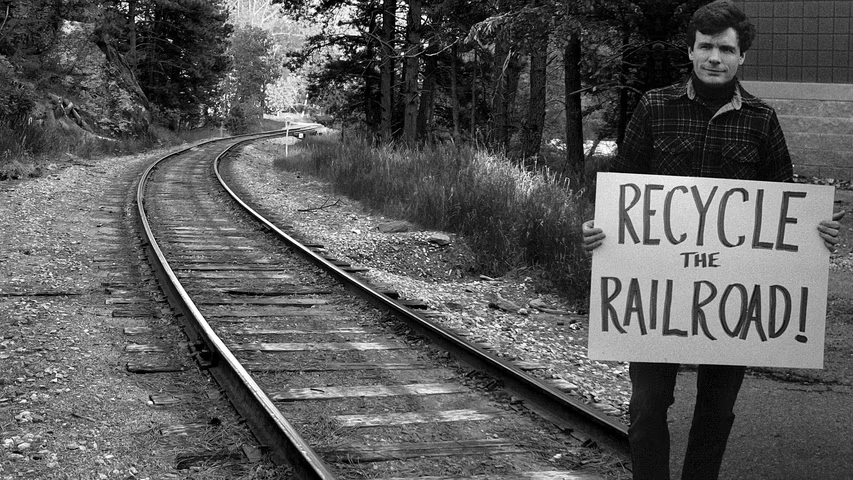
There was a time when the Mascoma River was seen as a source of power for industry, with the river hidden behind factories and businesses. The railway served those businesses as Lebanon developed. In many ways it serves a very different purpose today, re-creation in its many forms and maybe even relief from that development. Check out this new PBS special; From Rails to Trails. It’s the story of one of the most unlikely social movements in American history: the struggle to convert thousands of miles of abandoned railroads into trails for cycling and walking. Facing fierce opposition and legal challenges from private property owners, leaders fought to reclaim these corridors for the public, creating a national network of scenic, car-free paths.
A trishaw ride with John Newman on Lebanon’ s railtrails is always an enjoyable adventure. Yesterday’s ride on the MRG included finding a cluster of giant puffballs. (I thought they were styrofoam trash, but John, a forager, recognized the white heaps as puffballs.) Puffballs are decomposers. They feed on organic matter such as leaf litter, dead grass, decaying wood and dead tree roots, in the process breaking it down,
Giant puffballs , which can grow as big as a basketbal, are edible and difficult to mis-identify. (They are edible as long as the flesh is white.) This particular puffball was not edible – it was squishy. meaning it was past prime.
Hats off to nature’s humble decomposers, dung beetles, worms, bacteria, fungi such as puffballs, and the like; these organisms are vital for ecosystems, as they return essential nutrients to the soil, water, and air, making them available for new plant growth and preventing the accumulation of dead organisms.
The West Lebanon and Hanover Greenway is a collaboration between volunteers and municipal staff from Lebanon and Hanover to fulfill one of the key visions in the West Lebanon Action Plan, a safe multimodal route along the Route 10 corridor between the communities. The vision is a three-mile trail that brings the people of West Lebanon and Hanover together. Friends of Lebanon Recreation, Arts, and Parks is a steward of financial support, as the project seeks donations and grant assistance to develop plans. City of Lebanon Engineer Rod Finley is supporting the project by coordinating with consultants to conduct a feasibility analysis of different alternatives for the greenway route. The feasibility study consultant will present the project to our community at a Public House Event. Stop by to share your thoughts and ideas!
Date: Wednesday, August 27, 2025
Time: 2:00 – 4:00pm and 6:00pm – 8:00pm
Location: Outside at Sachem Field, 1 Field Road, West Lebanon Rain Location: Campion Rink lobby
Questions? Contact the Planning and Development staff through the online contact portal or the Lebanon Pedestrian and Bicyclist Advisory Committee through the Boards and Committees Contact Form.
I remember reading a history of the Northern Rail Road as it came through “The Cut” in Enfield. ” The Cut” was a rocky area that was being cut through by hand and was taking a very long time. There was much work to be accomplished on the Northern side of the area and those responsible for that work were eager to get beyond The Cut. The decision was made to move the engine to north of The Cut by oxen ao that work could progress beyond.
This is similar to our current circumstances. We have not yet been able to make our way beyond the current Glen Road ending of the MRG. While we figure this out, can we be working on other parts that will connect us to Vermont and to Hanover? Can we be working our way North and West? The Bridge Park work was an attempt to hop over the impasse and continue to work our way beyond.
Pollinator Garden at Bridge Park, looking West across the Connecticut River toward White River Jct. VT.
BTW, I will have to admit that I had thought the idea of a Connecticut River monster was a recent imagining . . . but such stories have circulated since the early 1800s! Learn More
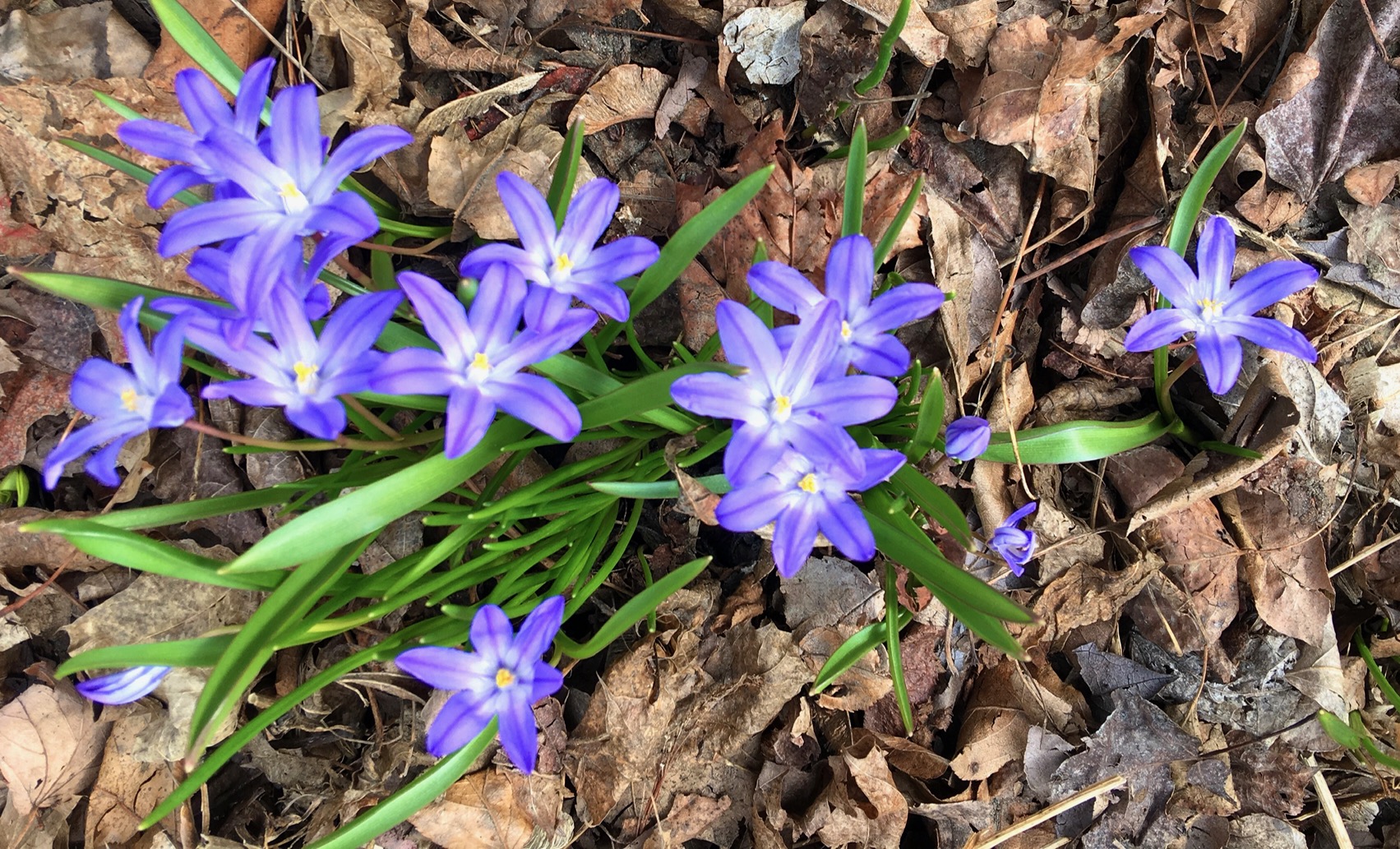
Such a treat to see this brilliant color on the MRG by the tunnel! Glory of the Snow is one of the first flowers to bloom in the Spring.Thanks to the nectar-rich blooms, the plant is very popular with pollinators such as bees.
A ring of small keys and an Energizer battery were found by the pollinator garden near the MRG overpass parking lot near APD. Are they yours? If so, please contact the Lebanon Rec Department.





 The Mascoma River Greenway